Scotland’s Railways · Callander railway explorer
Freight and industry
The goods railway at Callander and Springbank
Freight & industry · Dunblane, Doune and Callander
What the railway carried
Passenger trains were only part of this railway. Goods engines worked between Dunblane and Callander, Doune possessed a substantial goods operation, Callander's first station became a dedicated depot, and the Springbank Mill connection survived until 1971.
More than two closure dates
A railway of yards, wagons, mills and market traffic
Follow an actual dated goods working, the infrastructure at Doune and Callander, the traffic described on the connected railway and the industrial siding that kept rails in use after passenger closure.
Operating railway · 1923 description
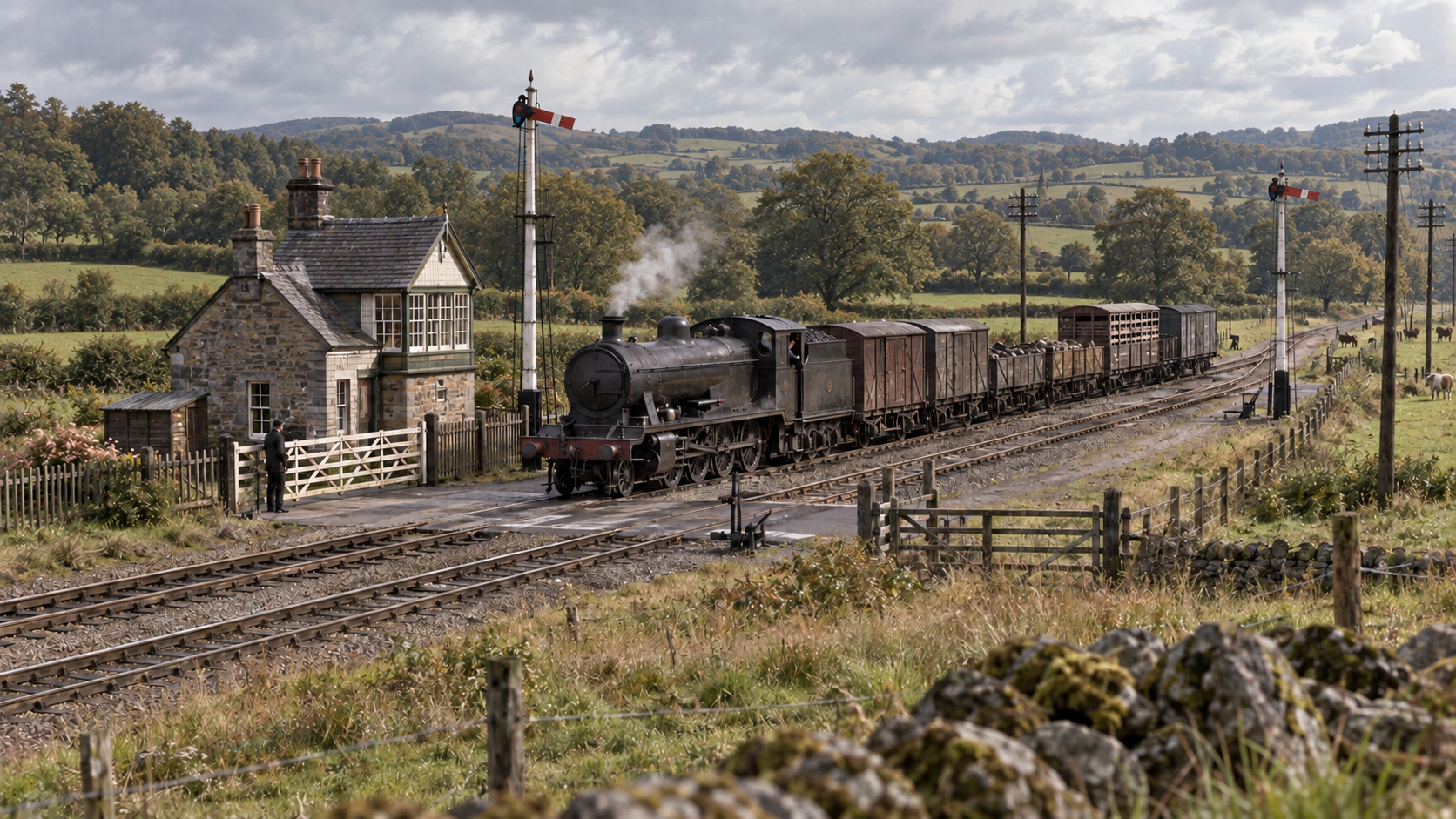
Goods trains worked the whole corridor
A contemporary operating account describes 0-6-0 goods engines working between Dunblane and Callander. It also records the connected railway supplying coal and seasonally carrying cattle and other livestock, placing the local line inside a much larger Highland distribution system.
- The Dunblane–Callander section carried through traffic as well as wagons for its own stations and sidings.
- Coal was an inward necessity for households, businesses and estates beyond the railway's immediate towns.
- Livestock and other seasonal traffic made the railway part of the rural economy rather than merely a passenger route.

Dated working · 26 October 1910
A Callander–Stirling goods train enters the record
The Caledonian Railway Association staff register preserves a dated reference to a goods train running from Callander to Stirling. Its delay affected traffic at Doune and drew the station master, Peter Cuthbert, into the surviving operating record.
- The entry identifies the direction and endpoints: Callander to Stirling.
- It confirms a working goods train over this railway rather than merely the existence of sidings.
- A second staff-register entry records three wagons being 'overlanded' at Doune in 1914, another glimpse of everyday goods handling.
Goods infrastructure · 1858–1965
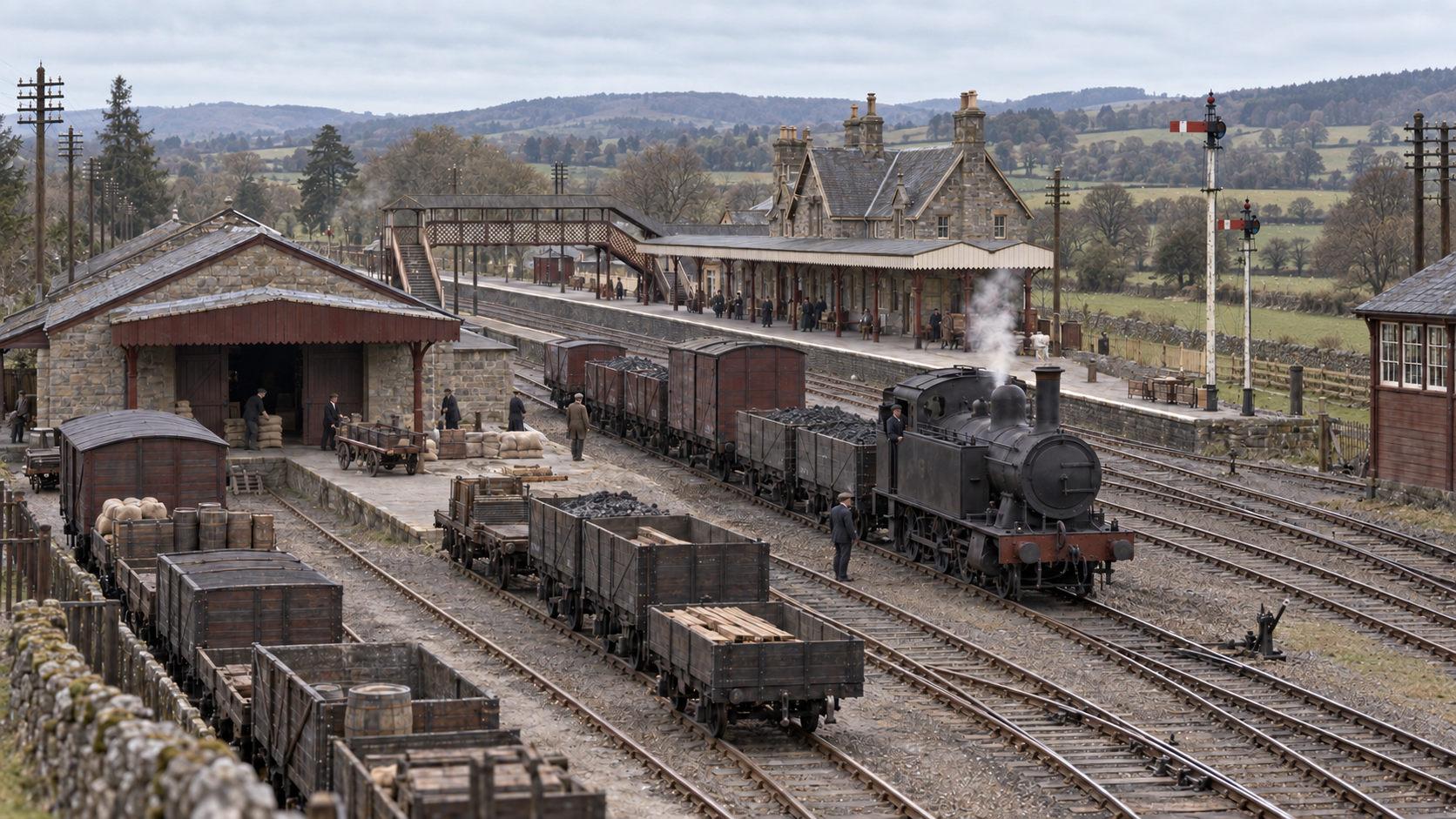
Doune was a goods station as well as a passenger stop
Doune originally had a goods shed at the east end and a separate goods yard at the west. The 1902 rebuilding enlarged the yard, provided a new goods shed and added a goods loop beside the expanded station.
- A National Records of Scotland catalogue entry identifies the 1901 architectural plan and elevation of Doune's goods shed.
- The broad island platform, loading banks and goods shed survived after closure long enough to document the scale of the site.
- Doune marked the western end of the double-track section from 1902 until singling in 1955.
Dedicated goods site · 1870–7 June 1965
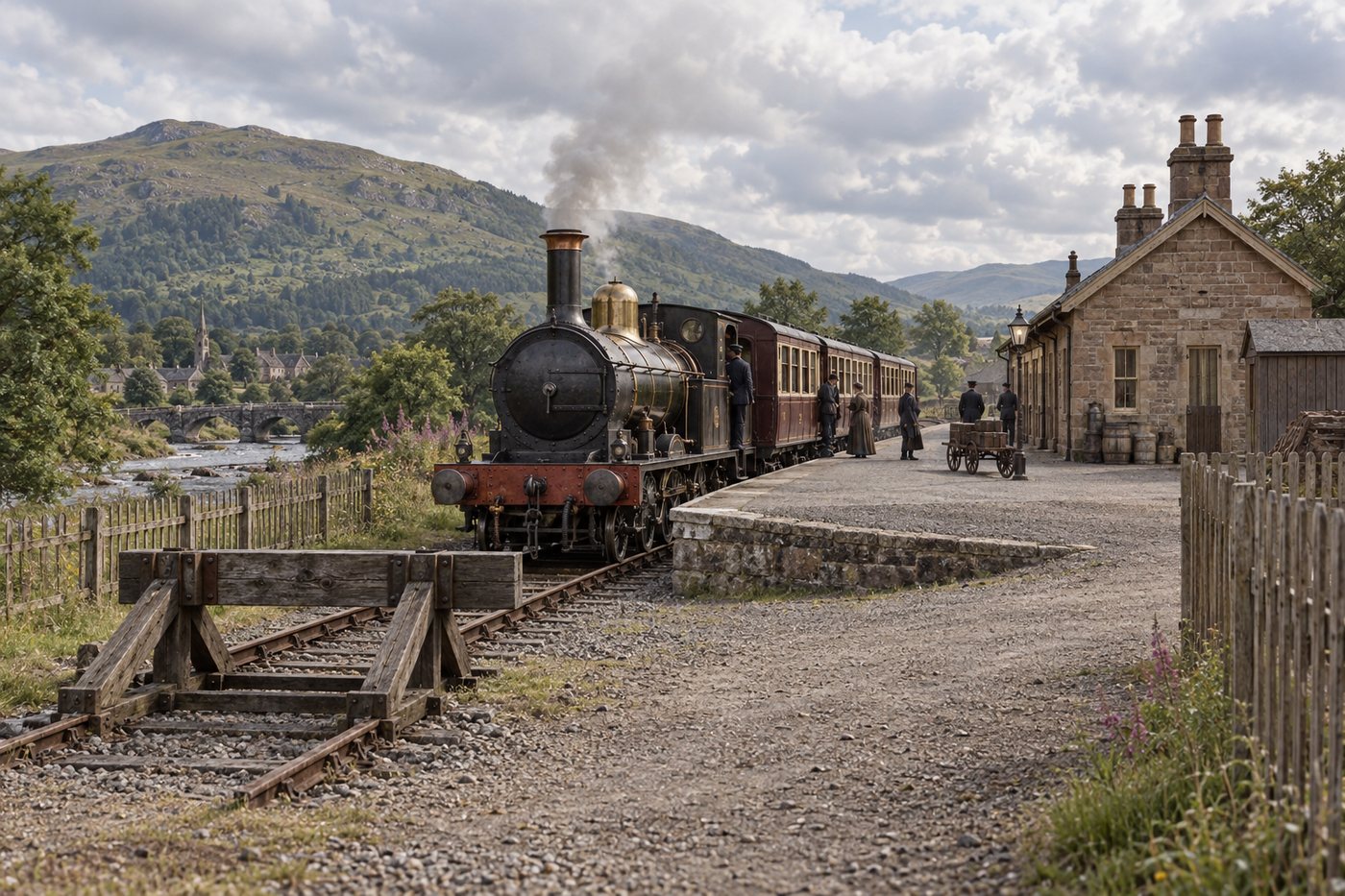
Callander's first station became its goods depot
When the through passenger station opened in 1870, the original terminus did not disappear. It became Callander's goods station, reached by its own junction arrangements and later by a reversal through the headshunt east of the town.
- The 1902 junction remodelling added a headshunt that allowed access to the former terminus.
- From 1938 the former westbound line became the separate route from Callander's passenger station to the goods depot.
- The Caledonian Railway Association records John Taylor as Callander's goods agent in 1922.
Industrial siding · 1965–30 July 1971
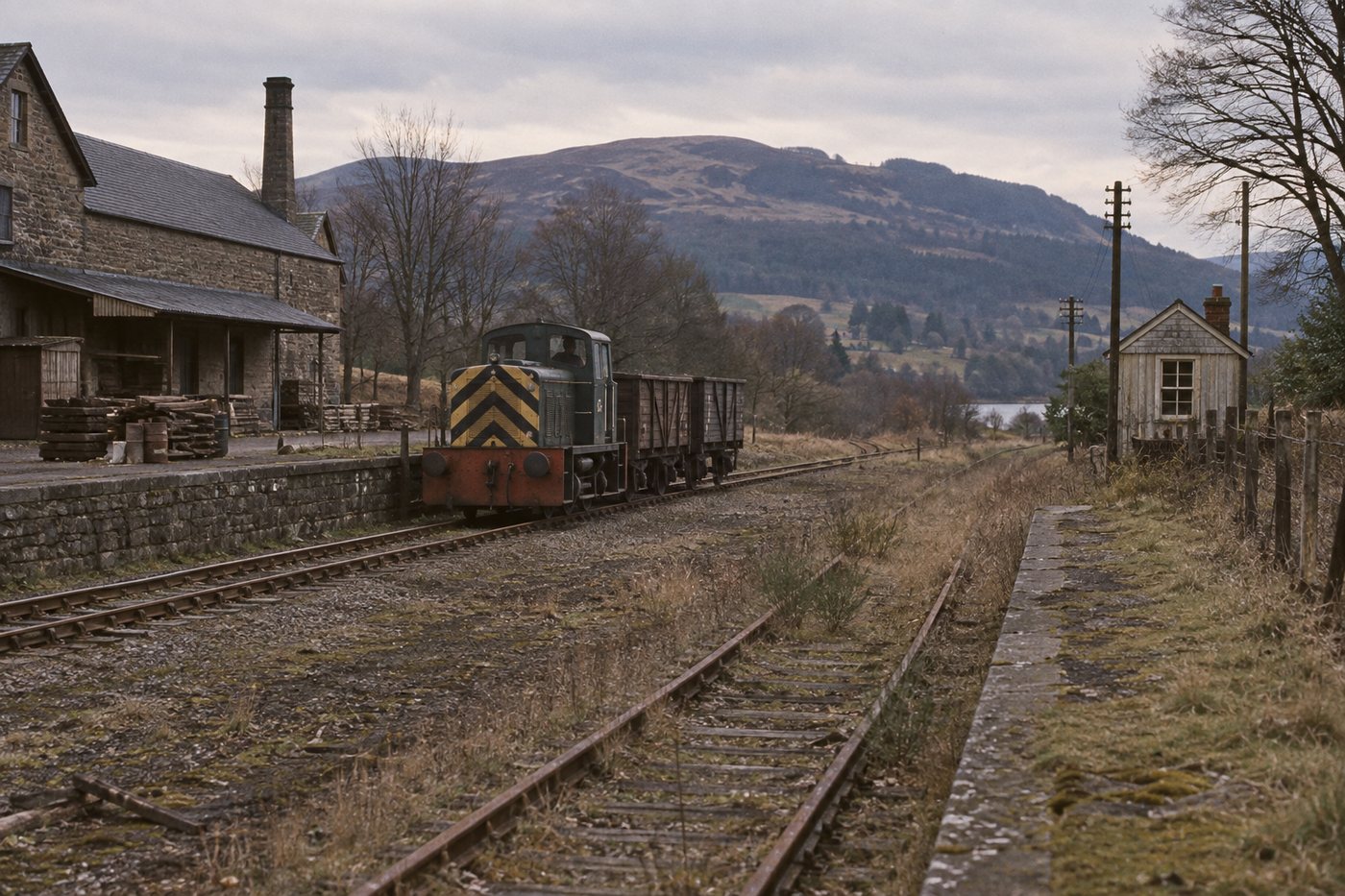
Springbank Mill kept the railway alive until 1971
Most freight operation west of Springbank ended in June 1965, but the short connection from Dunblane remained to serve Springbank Mill. It outlived the passenger railway by nearly six years and became the branch's final commercial purpose.
- The siding lay on the low-ground western approach out of Dunblane rather than at a passenger station.
- After its closure, a short length near Dunblane Junction remained as a permanent-way siding.
- The final date of the railway is therefore 1971 when freight is included, not simply the passenger closure of 1965.
East to west
The local freight landscape
Four places explain how goods entered the route, reached an industrial siding, were handled at Doune and finally entered Callander’s separate goods depot.

Gateway to the national network
Dunblane Junction
Every local or through goods working entered the main-line railway at Dunblane. The junction connected the Teith valley with Stirling, Glasgow and markets farther afield.
- Railway role
- Main-line interchange and eastern entrance to the branch
- Traffic relationship
- Callander–Stirling goods workings passed through this connection
- Later survival
- A short permanent-way siding remained after Springbank closed
Private industrial connection
Springbank Mill siding
Springbank was not a passenger station. Its mill siding was a freight destination whose usefulness preserved the first section of railway west of Dunblane until 1971.
- Railway role
- Mill siding on the approach west from Dunblane
- Freight survival
- Remained connected after the June and November 1965 closures
- Final closure
- 30 July 1971
Station yard, shed and loading banks
Doune goods yard
Doune handled goods at both ends of its original layout before the railway enlarged the operation in 1902 with a new shed, a larger yard and an additional goods loop.
- Original arrangement
- Goods shed at the east end; separate yard at the west
- 1902 rebuilding
- Enlarged yard, new goods shed and goods loop
- Recorded workers
- Station master Peter Cuthbert appears in the 1910 and 1914 goods records
Former terminus and dedicated depot
Callander goods station
The original 1858 passenger terminus became the town's separate goods station in 1870. It retained a distinct route and operating identity from the later through passenger station.
- Passenger use
- Original Callander terminus, 1858–1870
- Goods use
- Dedicated town goods station from 1870
- Goods closure
- Access from the later station closed on 7 June 1965
The working railway in the records
Traffic and infrastructure together
The goods story is strongest when train operation and the places built to handle it are read side by side.
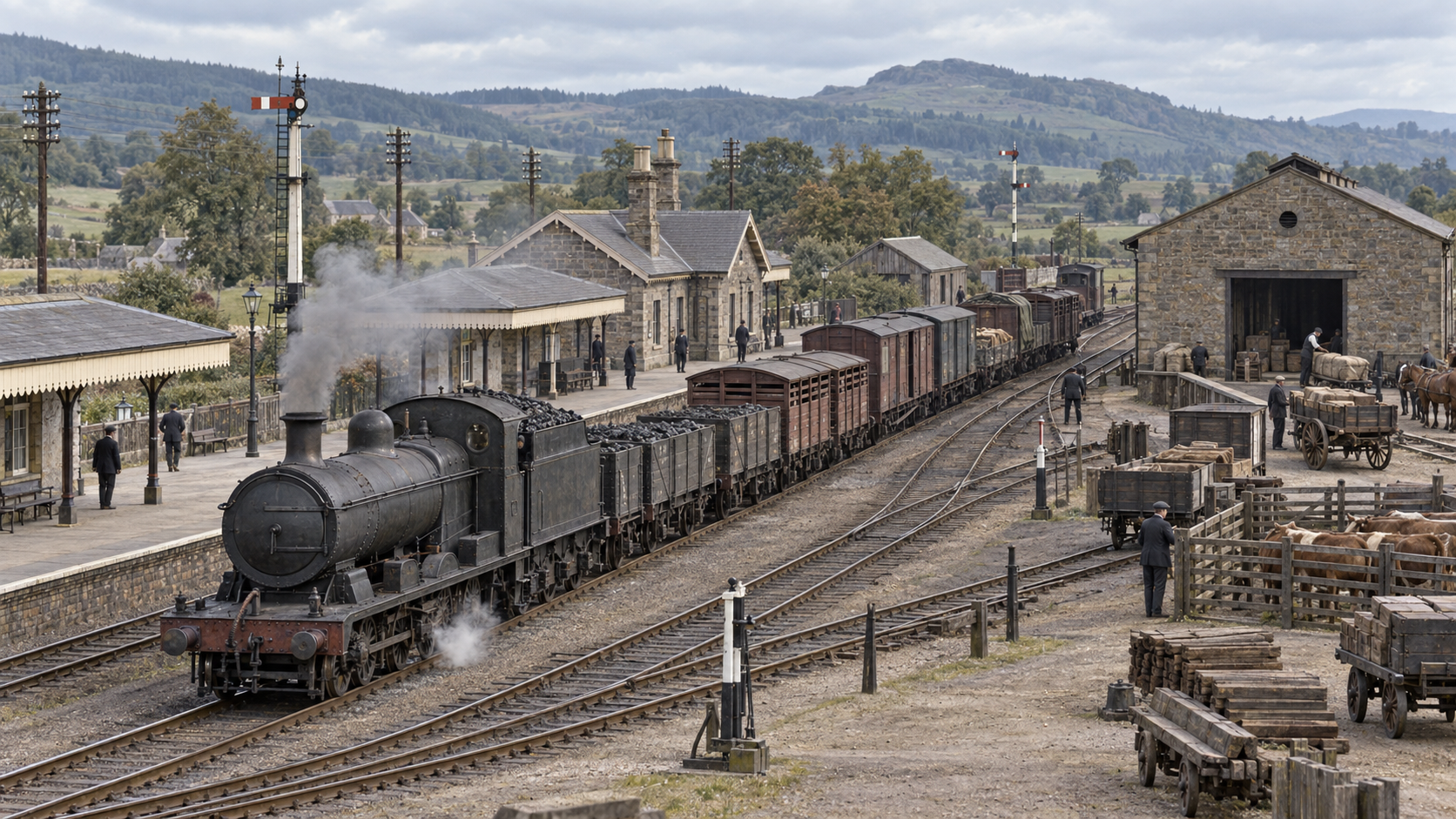
- A 1923 operating description identifies coal, cattle and other livestock among the traffic carried by the connected railway.
- The same account identifies 0-6-0 goods engines working between Dunblane and Callander.
- A dated Callander–Stirling goods train is recorded on 26 October 1910.
- Doune had a goods shed, yard, loading banks and a goods loop, substantially enlarged in 1902.
- Callander's original terminus became a dedicated goods station with its own access arrangements.
- Springbank Mill siding prolonged commercial railway use until 30 July 1971.
Keep exploring this railway
Choose another section
Each subject now has the same permanent place and line menu used by the Waverley Route.