Scotland’s Railways · Callander railway explorer
Accidents and disruptions
The published incident record and what remains to be recovered
Accidents and disruptions
5 incidents in the surviving record
A broken axle near Dunblane, the 1947 accident at Callander station and events on the connected railway towards Oban. Each record states exactly where it occurred and where the evidence remains incomplete.
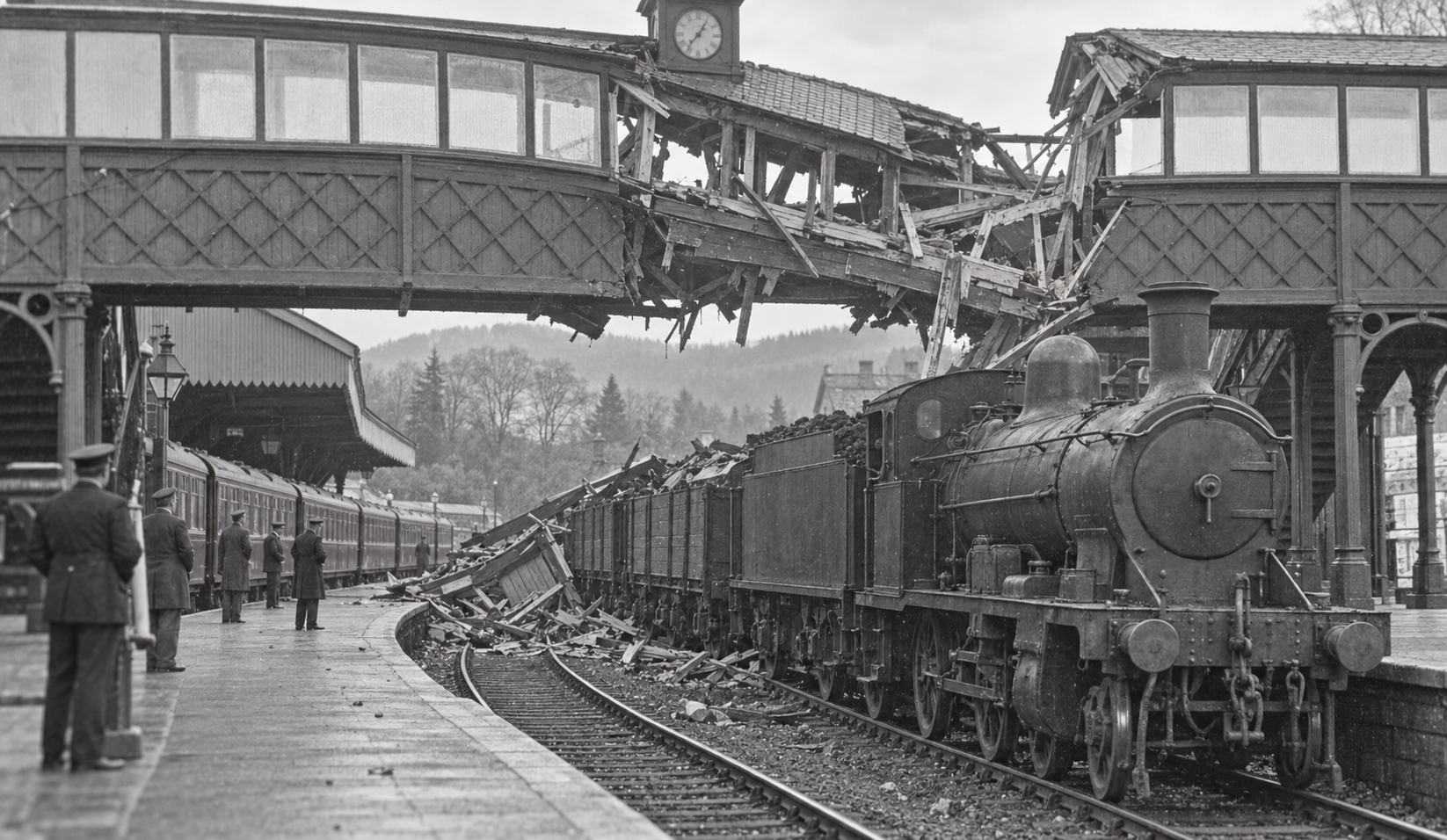
Callander station · 1947 · exact date still being checked
An accident destroys the clock-topped footbridge
Historic Environment Scotland records that Callander station's enclosed footbridge, crowned by a small clock tower, was replaced after a 1947 accident. A local account describes a runaway goods train striking the station while a passenger train stood at the platform, with no injuries; those additional details still require confirmation in a contemporary report.
The damage and replacement of the footbridge are confirmed in the official place record. The train movements and absence of injuries are retained as a clearly labelled community account, not presented as independently verified fact.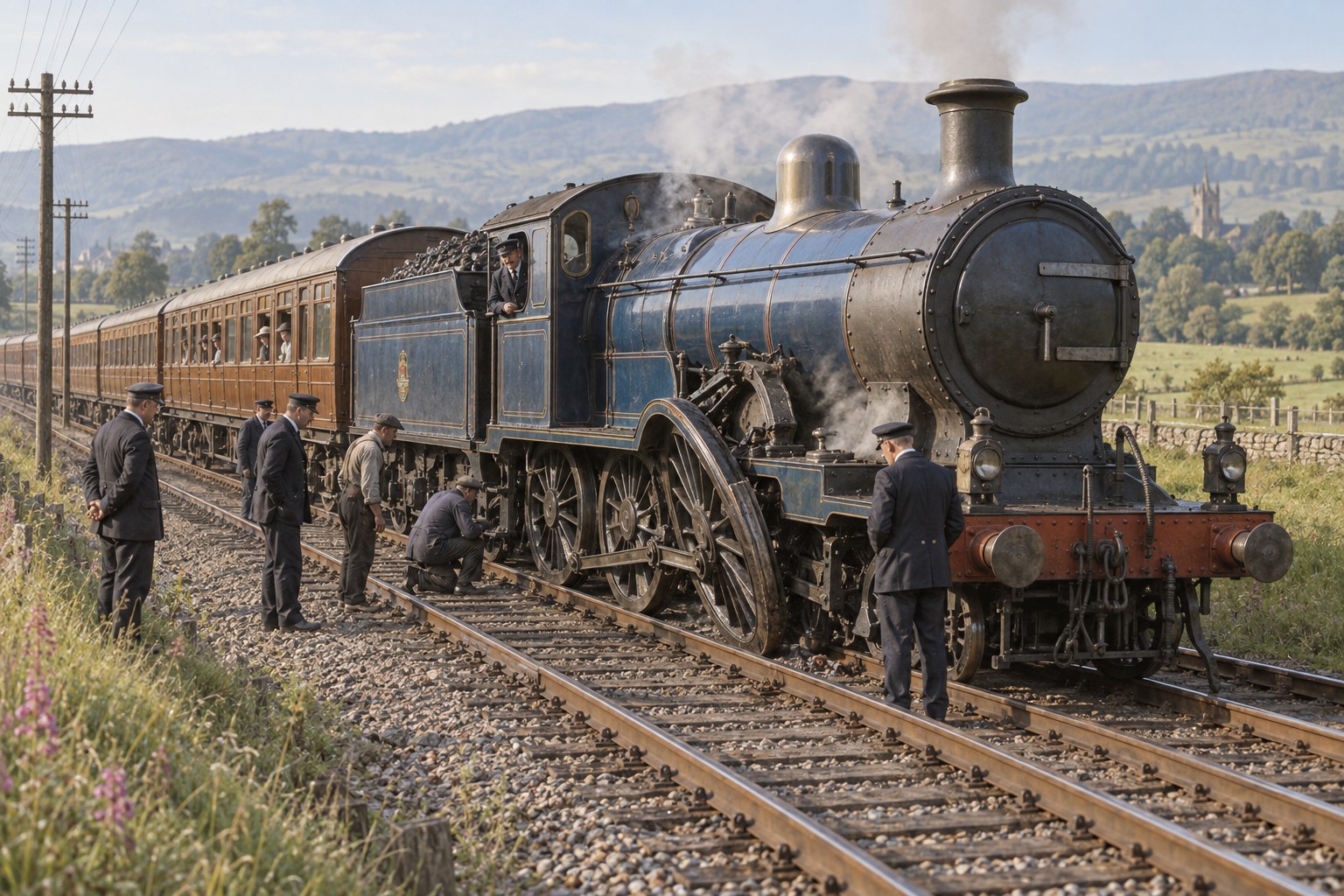
Core railway
A driving axle breaks on the Callander–Stirling passenger train
About 1½ miles north-west of Dunblane
The 7.20 am passenger train from Callander was stopped after an eight-foot driving-wheel axle broke and forced the wheel up through the engine. Driver Robert Scott applied the Westinghouse brake. Fireman Fred McDougall was thrown from the locomotive and seriously injured; the passengers were unhurt.
A modern transcription identifies the contemporary report as the Dundee Evening Telegraph, 3 July 1906, page 2. The Caledonian Railway Association staff index independently records McDougall, the broken axle and his injuries, citing the Perthshire Advertiser.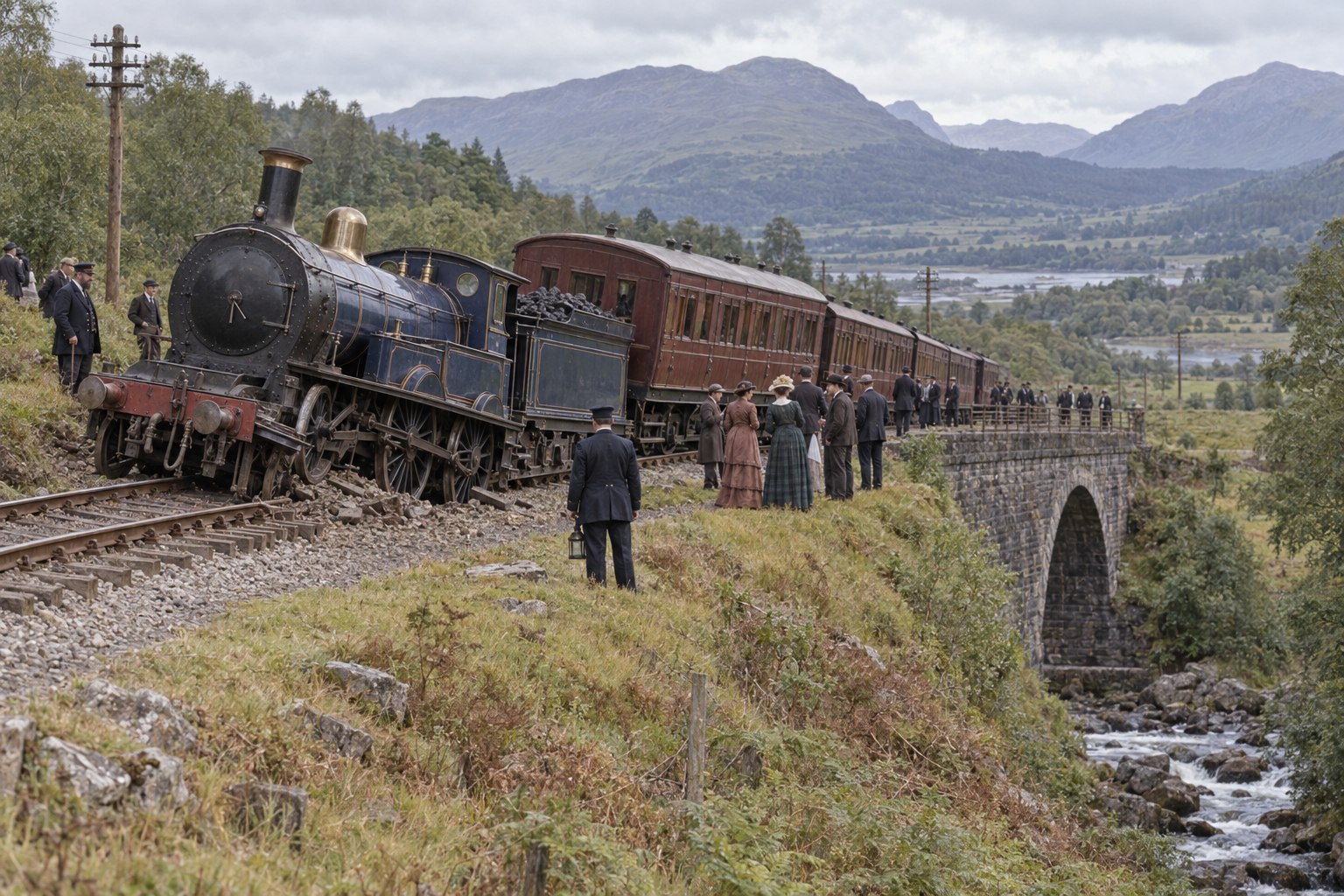
Connected railway west of Callander
A Falkirk–Oban excursion derails near Succoth Viaduct
Near Succoth Viaduct, Dalmally
The derailment is recorded in two specialist sources, but its date is not yet settled. A published secondary chronology gives 13 September 1886; a Caledonian Railway Association carriage-drawing note gives 26 June 1886. The event belongs to the Callander and Oban Railway west of the Dunblane–Callander core.
The chapter preserves the disagreement instead of silently choosing one date. A contemporary newspaper or official return is still required to reconcile the records.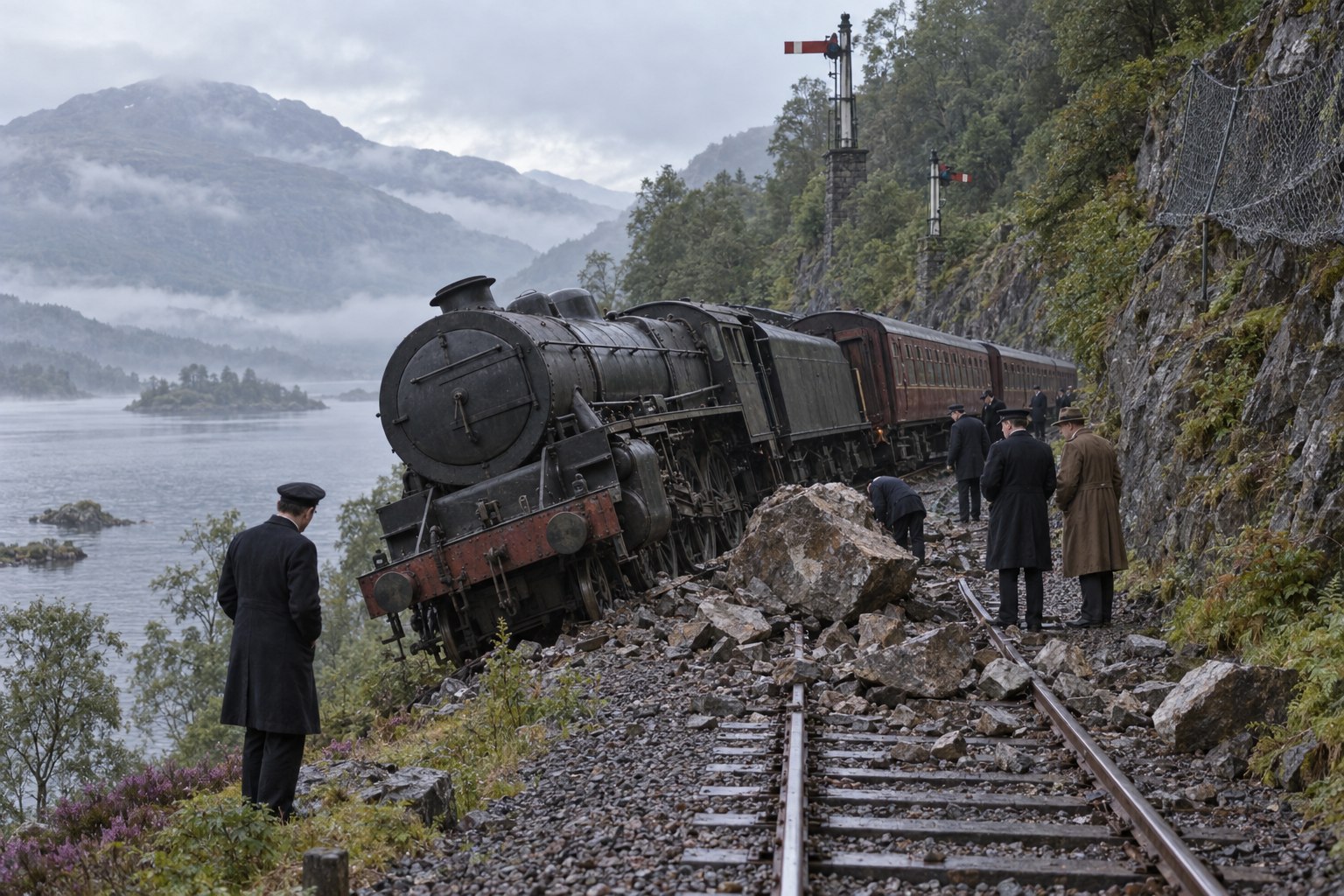
Connected railway west of Callander
The Oban–Glasgow train strikes a falling boulder
Pass of Brander
The 6.05 am train from Oban to Glasgow struck a large boulder in the Pass of Brander. Its steam locomotive and several carriages derailed, but nobody was hurt. The event occurred on the western Callander and Oban route, not on the ten-and-a-half-mile Dunblane–Callander railway.
The Rail Accident Investigation Branch summarised the 1946 occurrence while investigating the later Falls of Cruachan derailment.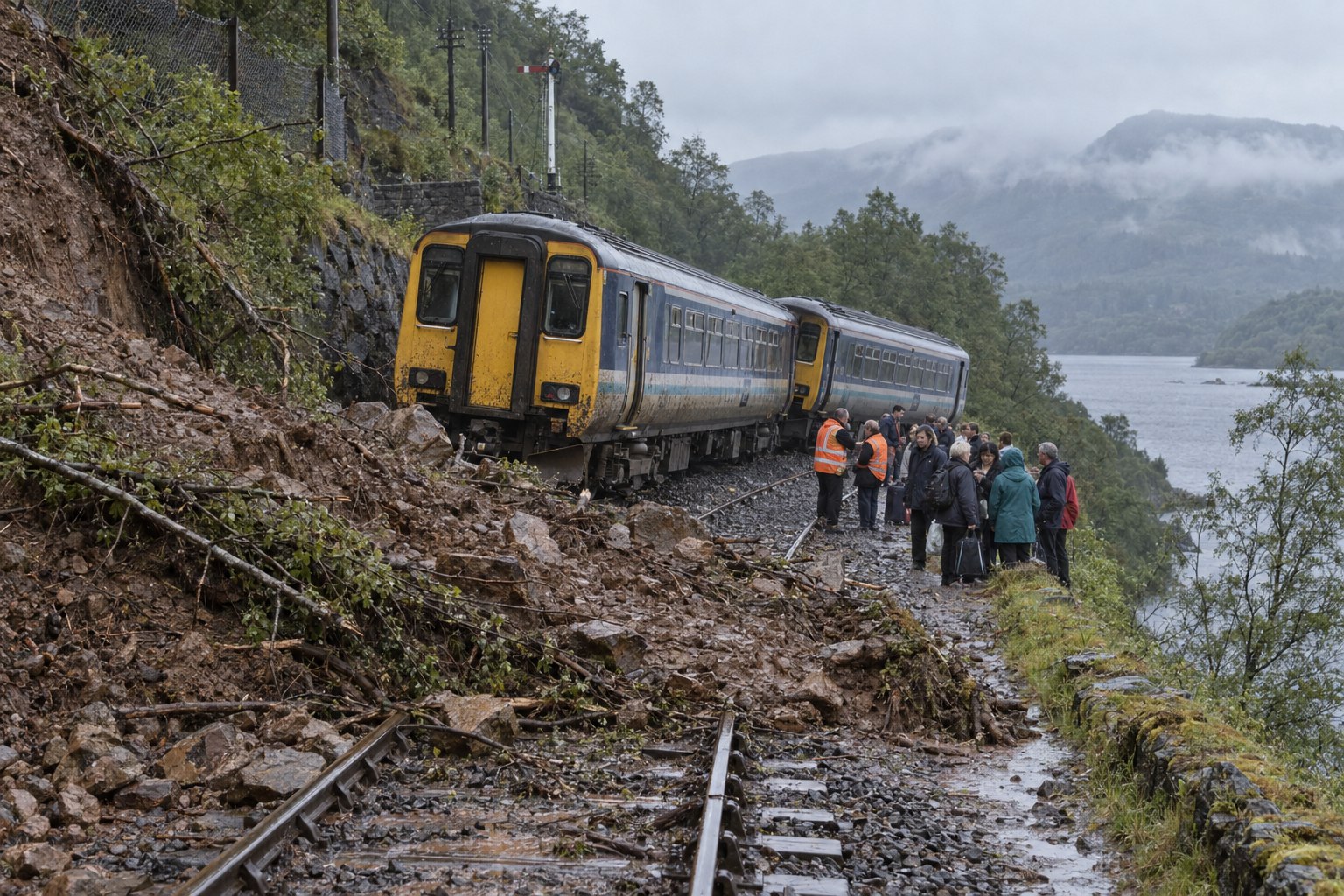
Surviving Oban line
A passenger train is derailed by a landslip
East of Falls of Cruachan
The 6.10 pm Oban–Glasgow Queen Street train, a Class 156 diesel unit, struck a landslip and was completely derailed but remained upright. There were no serious injuries. This section survives as the Oban branch of the modern West Highland Line.
RAIB records that the landslip fell from below the wires operating the automatic stone signals, so the signals were not triggered.Keep exploring this railway
Choose another section
Each subject now has the same permanent place and line menu used by the Waverley Route.