Scotland’s Railways · Port Road explorer
The Port Road: Dumfries to Stranraer
A railway across Galloway, linking rural communities with Dumfries and the Irish Sea crossing at Stranraer.
Keep exploring the Port Road
Choose another section
The complete set of Port Road subjects remains available throughout the route.
The Port Road · sourced line record
Accidents, Disasters & Disruptions
These records describe difficult events in the railway’s history. Official findings, known casualties and gaps in the surviving evidence are kept distinct. Not every operating failure was a disaster, so each record retains its precise category.
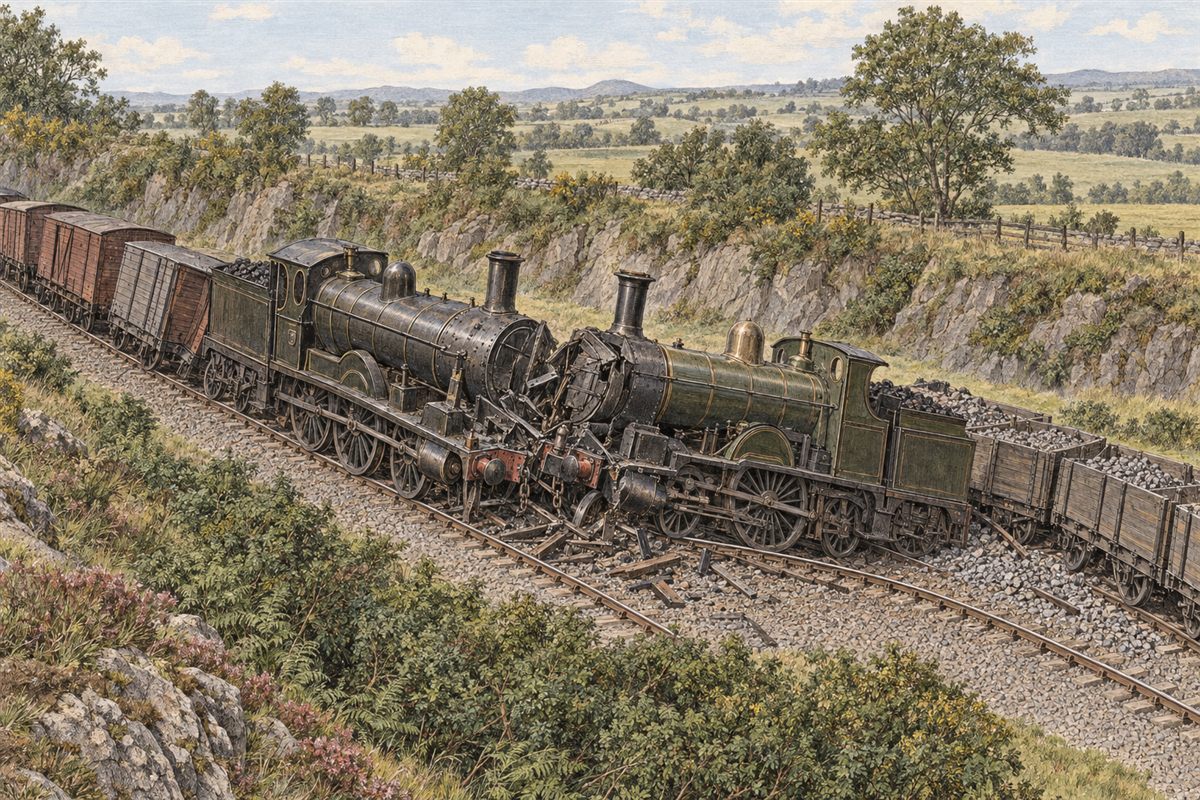
About three-quarters of a mile west of Dalbeattie · head-on collision
Goods and ballast trains collided near Dalbeattie
A Caledonian goods train from Dumfries to Stranraer collided head-on with a Glasgow and South Western ballast train returning towards Dalbeattie on the single line.
How events unfolded
- The 11:30 a.m. Caledonian goods train left Dumfries for Stranraer using a ticket for the single-line section.
- A Glasgow and South Western ballast train was already returning towards Dalbeattie with the staff from a ballast pit about one and a half miles from the station.
- The goods-train driver had not been shown the staff, and the staff's absence was not properly communicated after the stationmaster left.
- The trains met head-on about three-quarters of a mile west of Dalbeattie. Two people were killed and nine were injured.
- Trains or operations
- Caledonian goods train; Glasgow and South Western ballast train
- Fatalities
- 2
- Injuries
- 9
Evidence gap: The full damage, rescue and recovery account, together with any later disciplinary or procedural record, remains to be extracted.
No authenticated accident-scene photograph has been located. The illustration above is an evidence-led interpretation, not historical evidence.
Read the report record ↗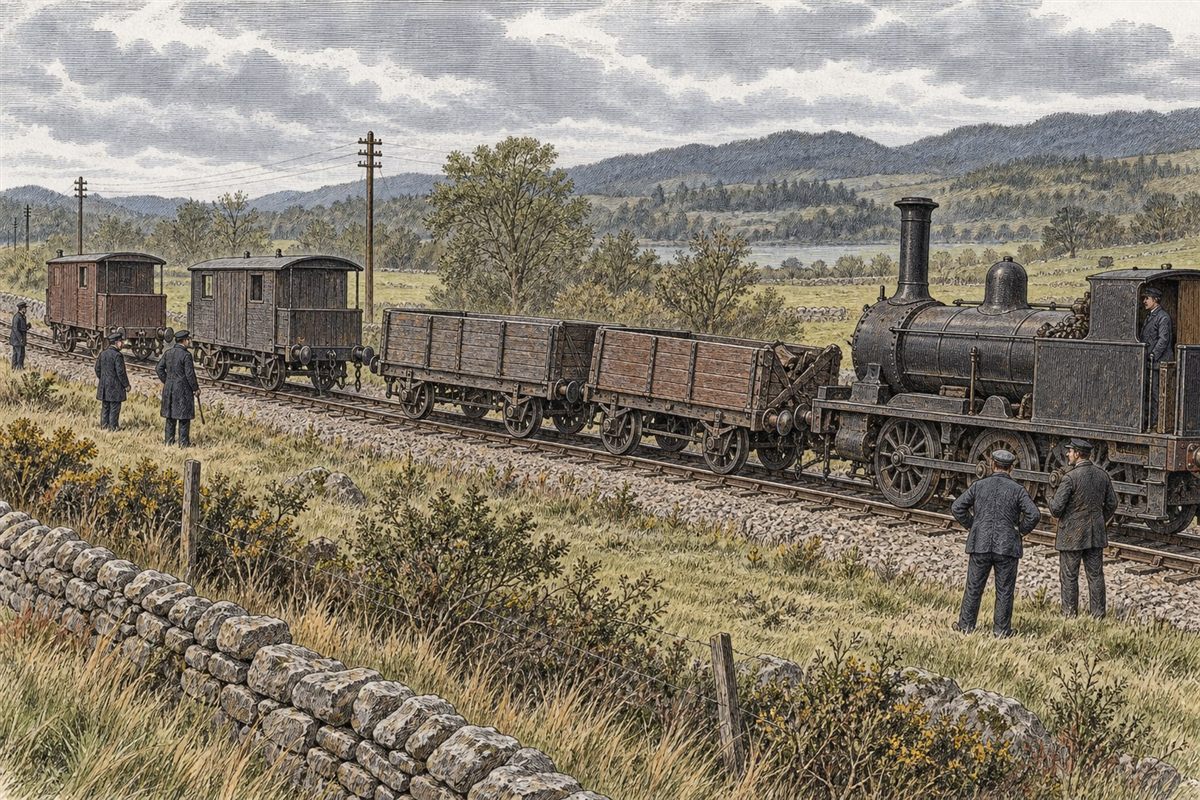
Castle Douglas–Dalbeattie section · collision
Goods train struck detached wagons near Dalbeattie
Two wagons and two vans broke away from the rear of a Glasgow and South Western goods train and were struck by a following Caledonian goods train on the single line between Castle Douglas and Dalbeattie.
How events unfolded
- A draw-bar cotter dropped out on the Glasgow and South Western goods train, separating two wagons and two vans from the front portion.
- The detached vehicles remained or ran on the single-line section between Castle Douglas and Dalbeattie.
- The following Caledonian goods train from Castle Douglas to Carlisle struck the detached vehicles.
- The missing cotter was never found, so the report could not determine why it worked out of the draw-bar.
- Trains or operations
- Glasgow and South Western goods, Castle Douglas–Dumfries; 3:15 p.m. Caledonian goods, Castle Douglas–Carlisle
- Fatalities
- Not established
- Injuries
- Not established
Evidence gap: Casualty totals, the first train's time in the archive transcription, exact collision position, damage, recovery and the date block telegraph working was introduced remain to be established from the report scan or later records.
No authenticated accident-scene photograph has been located. The illustration above is an evidence-led interpretation, not historical evidence.
Read the report record ↗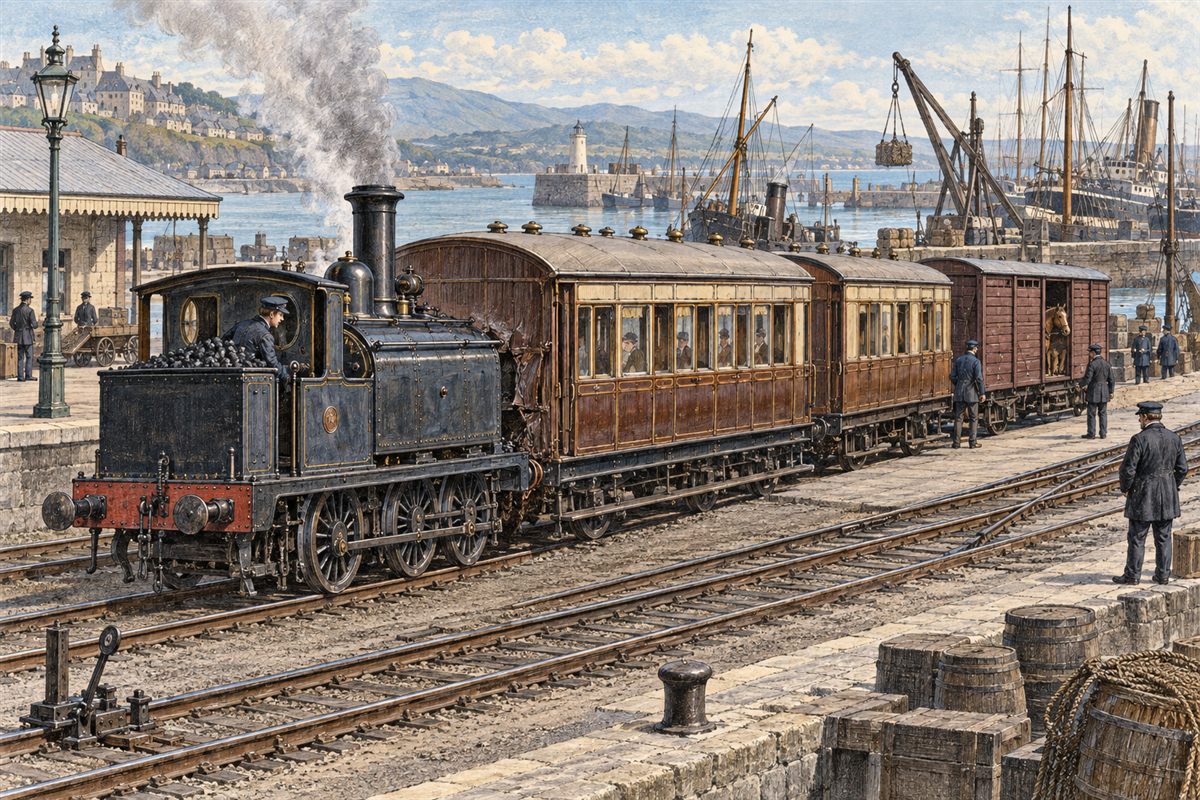
Stranraer Harbour · collision
Train engine struck passenger vehicles at Stranraer Harbour
In darkness at Stranraer Harbour, a Caledonian engine arriving to attach to the Dumfries train struck its passenger vehicles after a light pilot engine had pushed them forward while a horse-box was being attached.
How events unfolded
- Vehicles for the evening Stranraer Pier–Dumfries train stood beside the loading bank on the Harbour branch.
- Because the harbour platform rested on weak piers, a light pilot engine pushed the vehicles forward and began attaching a horse-box at the rear.
- The approaching train engine's driver expected the vehicles to remain close to the platform and could not readily see their new position in the dark.
- The under-guard did not show the red hand lamp he had been instructed to display, and the coaches carried no head lamp; the engine ran into the front of the passenger vehicles.
- Trains or operations
- Vehicles for the evening Stranraer Pier–Dumfries train; Caledonian train engine
- Fatalities
- Not established
- Injuries
- Not established
Evidence gap: Casualty totals, damage and recovery details remain to be extracted from the complete report.
No authenticated accident-scene photograph has been located. The illustration above is an evidence-led interpretation, not historical evidence.
Read the report record ↗