Site menu
Scotland’s Railways · line explorer
People and life
The Waverley Route · Edinburgh to Carlisle
A railway through city, Borders and upland country
Edinburgh Waverley → Carlisle Citadel
From its Victorian origins to closure and return
People & Life
The people behind the railway
Meet the promoters, engineers, contractors and campaigners who shaped the Waverley Route—from its earliest surveys to the return of trains through the Borders.

Early railway promoter
John Learmonth
As founder of the North British Railway, Learmonth pursued a railway network through the Borders and the Edinburgh–Hawick scheme. The distinction matters: he promoted the expansion but is not presented as its engineer.
Their Waverley connection
North British Railway · Edinburgh–Hawick promotion · 1840s
Public-domain portrait · Marguerite Wood / Wikimedia Commons
Civil engineer and surveyor
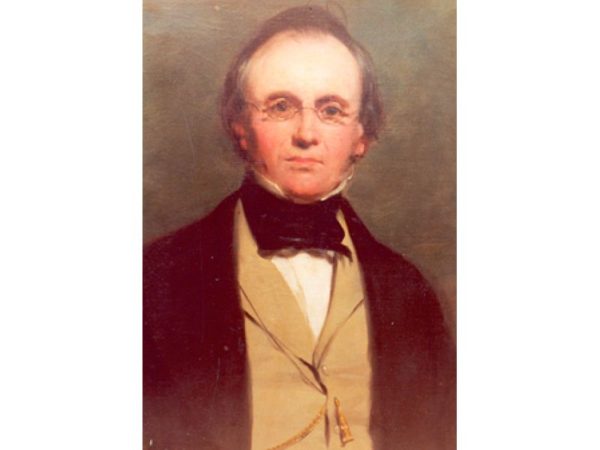
John Miller
Miller surveyed an NBR route from Hawick towards Carlisle in 1845 and later gave detailed engineering evidence on the competing Border railway proposals. His own recorded testimony makes this more than a name in a company history.
Their Waverley connection
Hawick–Carlisle survey · North British Railway engineer · parliamentary evidence
John Miller, painted c.1847 by Sir John Watson Gordon · ICE Scotland Museum / Live Borders

The cultural namesake
Sir Walter Scott
The through railway became known as the Waverley Route through the Border landscape associated with Scott and his Waverley novels. Scott died before the line opened and is included for the railway’s identity—not as a builder or promoter.
Their Waverley connection
Abbotsford · Waverley novels · identity of the through route
Public-domain portrait · Henry Raeburn / Wikimedia Commons

Surveyor of the northern foundation
Robert Stevenson
In 1818 Stevenson surveyed the Edinburgh and Dalkeith Railway, the early railway later acquired and developed by the North British as part of the northern approach to the Waverley Route. This is a predecessor-line connection, explicitly earlier than the through route.
Their Waverley connection
1818 Edinburgh and Dalkeith Railway survey · northern route foundation
Public-domain portrait · John Syme / National Galleries of Scotland / Wikimedia Commons

Campaigner across closure and return
Madge Elliot
Elliot joined the 1968 anti-closure petition to Downing Street and remained a public advocate for restoring rail service to the Borders. In 2015 she was recorded among the first passengers on the reopened Borders Railway; the achievement belonged to a much wider campaign.
Their Waverley connection
1968 closure petition · decades of campaigning · 2015 Borders Railway
Borders Railway context · not presented as a portrait

NBR chairman, promoter—and a scandal
Richard Hodgson
As North British Railway chairman, Hodgson toured the Border towns to build support for the company’s Hawick–Carlisle proposal. The line was authorised and begun under his chairmanship; he later resigned during the NBR financial scandal of 1866.
Their Waverley connection
Border Union promotion · NBR chairman 1855–1866 · financial scandal
Richard Hodgson, c.1840 – Harriet F. S. Mackreth / Wikimedia Commons; public-domain portrait
North British Railway engineer
J. F. Tone
Tone was the NBR engineer responsible for the difficult Hawick–Newcastleton construction section, including the railway through the Whitrope country. Contemporary engineering reports provide the route-specific connection.
Their Waverley connection
Hawick–Newcastleton engineering · Border Union Railway
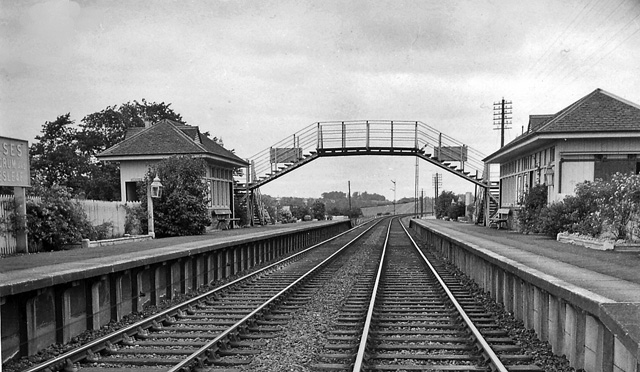
Belses station · Waverley Route context · Ben Brooksbank / Geograph, via Wikimedia Commons
Portrait unavailable
CJ
Engineer of the southern contracts
Charles Jopp
Jopp was the engineer for the Penton–Carlisle portion of the Border Union Railway. His role belongs beside Tone’s so the southern line is not misleadingly attributed to one famous engineer.
Their Waverley connection
Penton–Carlisle engineering · Border Union Railway
Verified portrait not yet located.

Whitrope contractor
William Ritson
Ritson contracted the Shankend–Whitrope section, where the tunnel, viaduct, unstable ground, severe weather and water made construction exceptionally difficult. The contract overran both its intended completion date and original cost.
Their Waverley connection
Whitrope construction contract · 1859–1862
Whitrope railway bridge · context for Ritson’s construction section · Oliver Dixon / Geograph, via Wikimedia Commons
Portrait unavailable
AB
Campaign for Borders Rail chair
Anne Borthwick
Borthwick presented the campaign’s case to the Scottish Parliament in 2005, describing the Tweedbank railway as the first phase of reinstating the full Edinburgh–Carlisle route.
Their Waverley connection
Campaign for Borders Rail · evidence to Parliament
Train at reopened Galashiels · campaign outcome context · Walter Baxter / Geograph, via Wikimedia Commons

Campaign witness and advocate
Bill Jamieson
Jamieson gave detailed evidence alongside Anne Borthwick on journey times, access to work and education, car dependence and why a railway offered something buses could not.
Their Waverley connection
Campaign for Borders Rail · parliamentary evidence
Stow station on the new Borders Railway · campaign outcome context · Walter Baxter / Geograph, via Wikimedia Commons

Early reinstatement campaign voice
Lorne Anton
Anton spoke for Campaign for Borders Rail at the Scottish Parliament’s Public Petitions Committee in 2000, arguing for both passenger reconnection and the possibility of moving timber by rail.
Their Waverley connection
2000 public petition · passenger and freight case
The railway beside Gala Water · reinstatement corridor context · Geograph contributor, via Wikimedia Commons

Borders Railway project director
Huw Wark
Wark led the modern delivery team during construction. A 2014 engineering account records an 800-strong workforce tackling earthworks, track, signalling and communications across the 49-kilometre railway.
Their Waverley connection
Modern project delivery · Borders Railway construction
Newbattle Viaduct during the Borders Railway works · construction context · Richard Webb / Geograph, via Wikimedia Commons
Keep exploring the Waverley Route
Continue exploring
Choose a subject, then open its detailed chapters.