Scotland’s railway history, reconstructed from evidence.
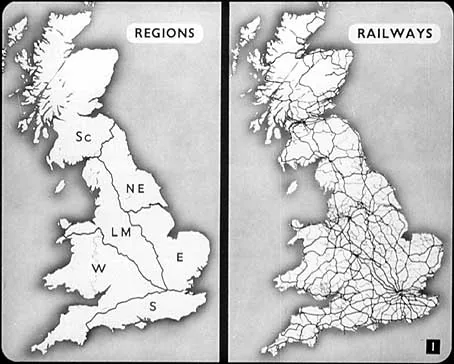
Scotland's RailwaysMapping our railway heritageA 1951 British Transport Commission filmstrip introduced the new regional railway to a generation growing up after nationalisation.British Transport Commission · public domain via Wikimedia Commons
Scotland’s railways · 1948–1967
British Railways & the End of Steam
One railway, new trains and the last great steam journeys.
Nationalisation brought the Scottish network into British Railways. Steam still dominated the landscape, but diesel traction, changing travel and the first major closures were already remaking it.
From 1948 the former LMS and LNER lines became part of British Railways. New totems, liveries and regional structures appeared, while passengers still encountered many familiar steam locomotives, timber signal boxes and company-built stations. The network was national in ownership but deeply local in character.
02
The railway day
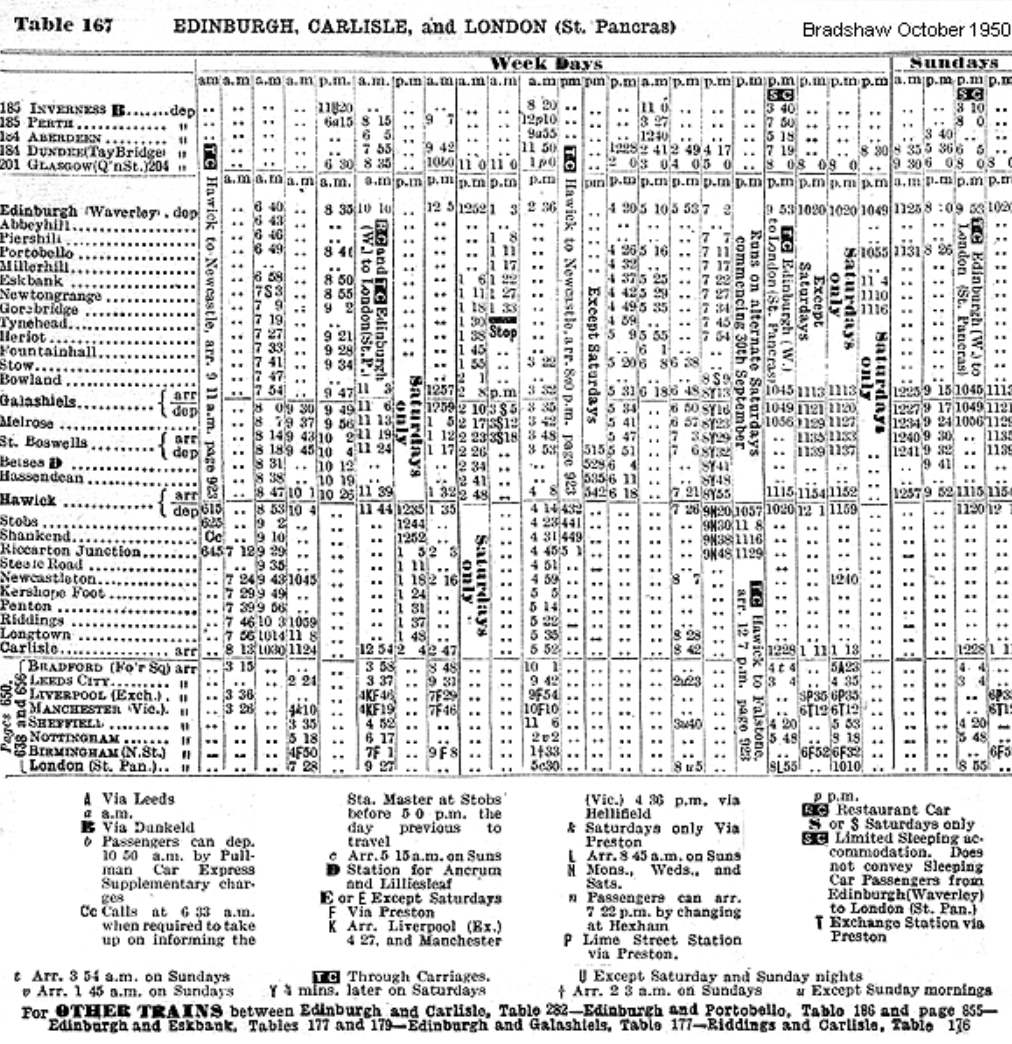
The timetable joined work, school, shopping, holidays and overnight travel. On 15 June 1964 the Waverley Route and Port Road can be read together through surviving passenger timetable evidence: calls at country stations, long-distance connections and the disciplined rhythm of printed times. The timetable shows a service plan, while photographs and recollections restore atmosphere.
03
Modernisation and loss
Diesel multiple units and new traction promised a cleaner, more economical railway. At the same time, changing industry, road competition and the reshaping programme put routes and stations under pressure. The Port Road lost its passenger service in 1965; Doune and Callander followed that year. By 1967 the Waverley Route was also facing closure.
Moments on the railway
Dates that changed the lines.
Follow the events already connected to the Waverley Route, Port Road and Dunblane–Callander railway stories.
The Waverley Route
British Railways takes over
The route passes into public ownership with the nationalisation of the main-line railways under the Transport Act 1947.
The core Edinburgh-Carlisle railway is open. The project holds a verified Summer 1964 public passenger timetable and uses its transcribed calls as simulation anchors.
Passenger closure proposal enters the statutory process
The Government allows British Railways to publish its proposal to withdraw Edinburgh–Carlisle passenger services, beginning the formal process that preceded the final decision.