Scotland’s railway history, reconstructed from evidence.
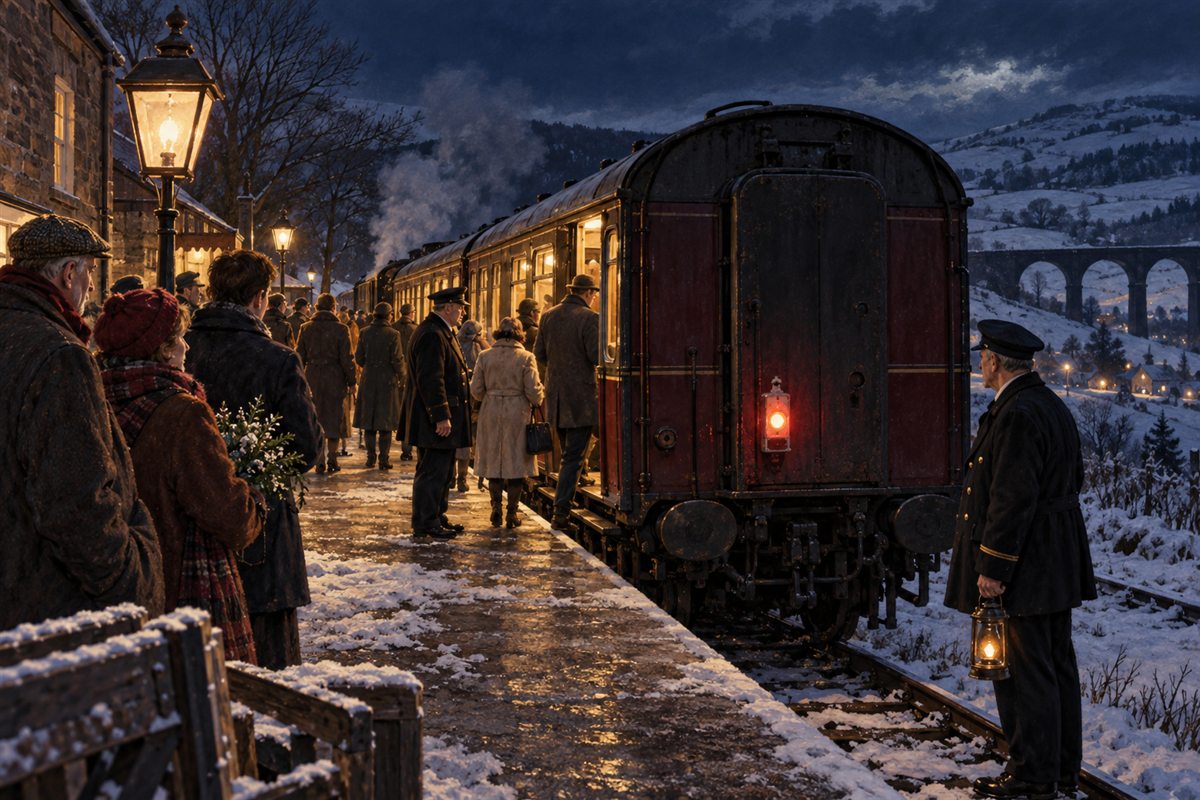
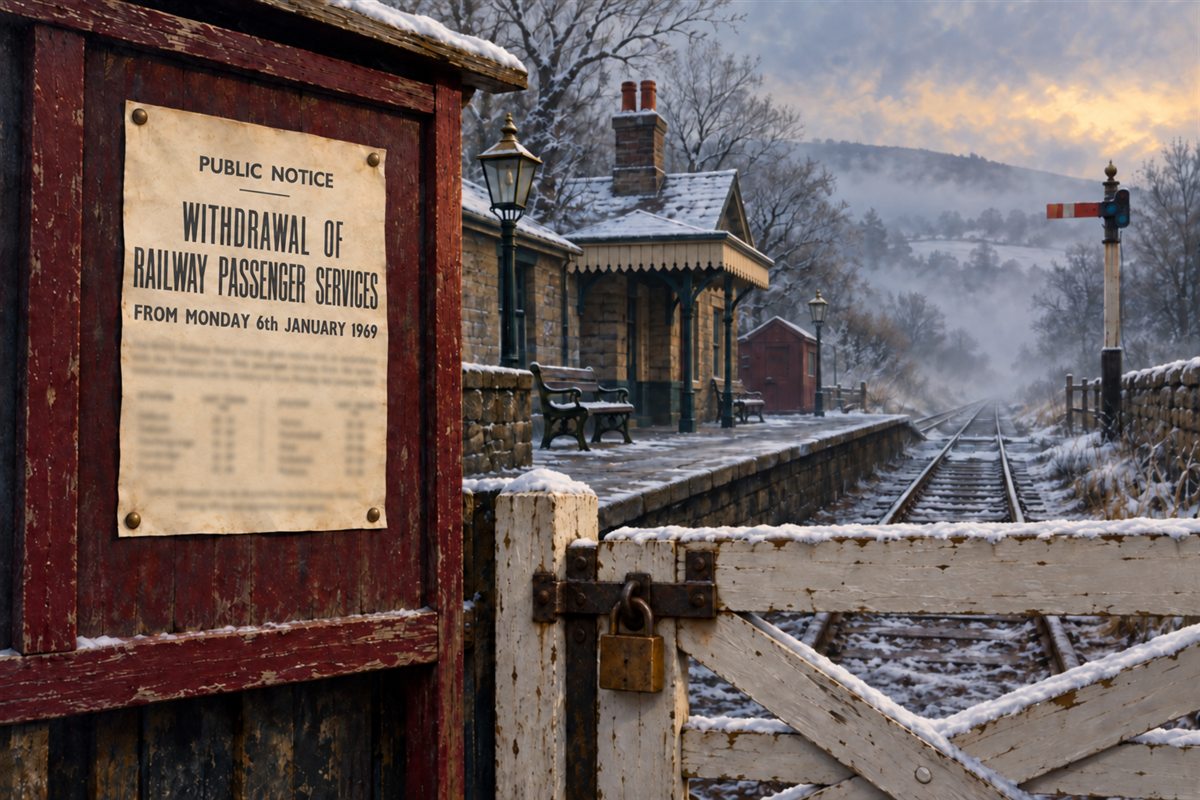
Scotland's RailwaysMapping our railway heritageThe final passenger trains over the Waverley Route in January 1969 became an enduring symbol of railway loss in the Borders.Scotland’s Railways interpretive artwork
Scotland’s railways · 1968–1993
Rationalisation & Modernisation
A smaller railway—and a landscape of memory.
Modern trains and concentrated main lines arrived alongside closures that severed communities from the network. What disappeared from the timetable began to live on in campaigns, photographs and local memory.
The Waverley Route closed to passengers in January 1969 after a determined public campaign. The remaining Dunblane–Callander freight traffic ended in 1971. Across Scotland, station buildings were sold or demolished, track was lifted and formations returned to fields, forestry and roads. The change was physical, economic and emotional.
02
Modern trains, different journeys
Elsewhere the railway modernised. Diesel and electric traction replaced steam, signalling was concentrated and InterCity services focused investment on principal routes. Faster road travel and private car ownership altered expectations. The network that emerged was leaner and more standardised, but many towns had lost their trains entirely.
03
Memory becomes a movement
Enthusiasts photographed the last workings, collected tickets and timetables, and explored disused stations. Heritage railways demonstrated that railway history could be experienced, not merely archived. In the Borders, regret gradually became organisation and argument: the beginnings of a campaign that would outlast the closure era.
Moments on the railway
Dates that changed the lines.
Follow the events already connected to the Waverley Route, Port Road and Dunblane–Callander railway stories.
The Waverley Route
Ministerial consent given for passenger withdrawal
The Minister of Transport gives consent to withdraw passenger services between Edinburgh, Hawick and Carlisle, subject to additional bus services.