Scotland’s railway history, reconstructed from evidence.
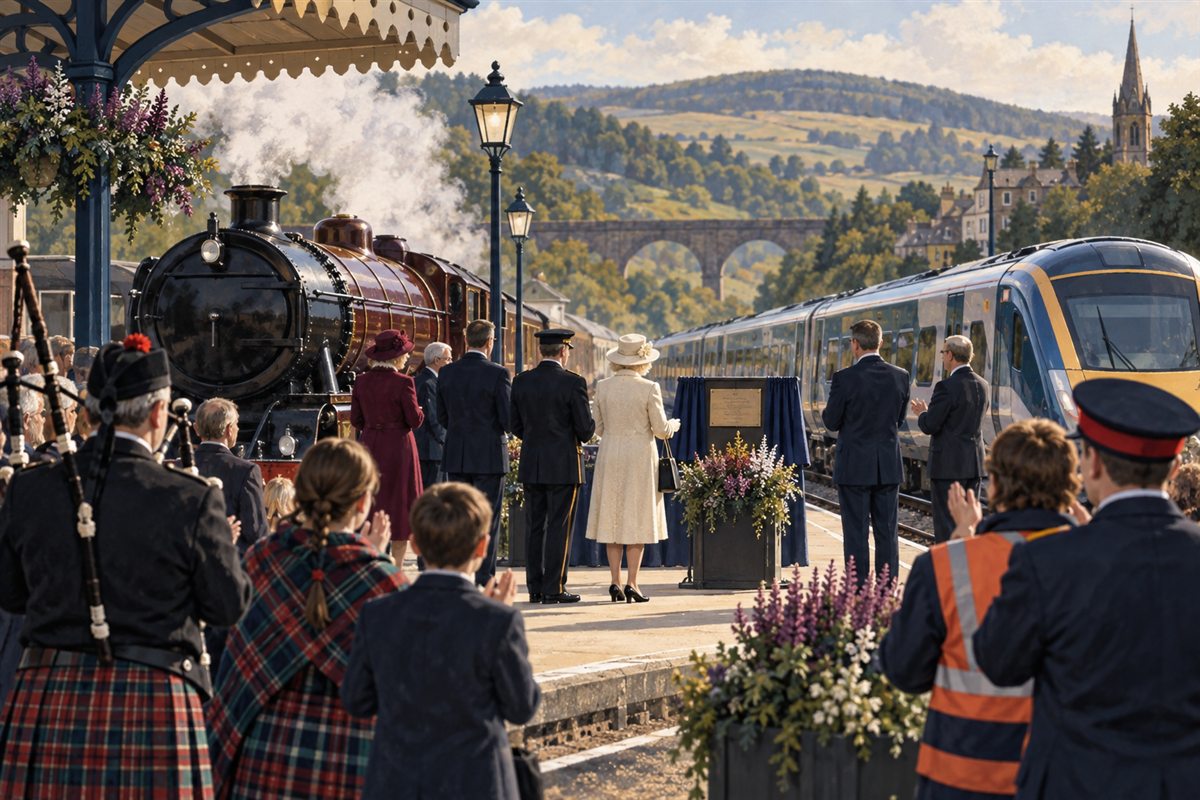
Scotland's RailwaysMapping our railway heritageThe opening of the Borders Railway in 2015 returned regular passenger trains to part of the former Waverley Route.Scotland’s Railways interpretive artwork
Scotland’s railways · 1994–Today
The Modern Railway
Preservation, return and a railway still changing.
The modern story is not simply what survived. It includes community campaigns, rediscovered routes, new stations, heritage work and the return of passenger trains to the Borders.
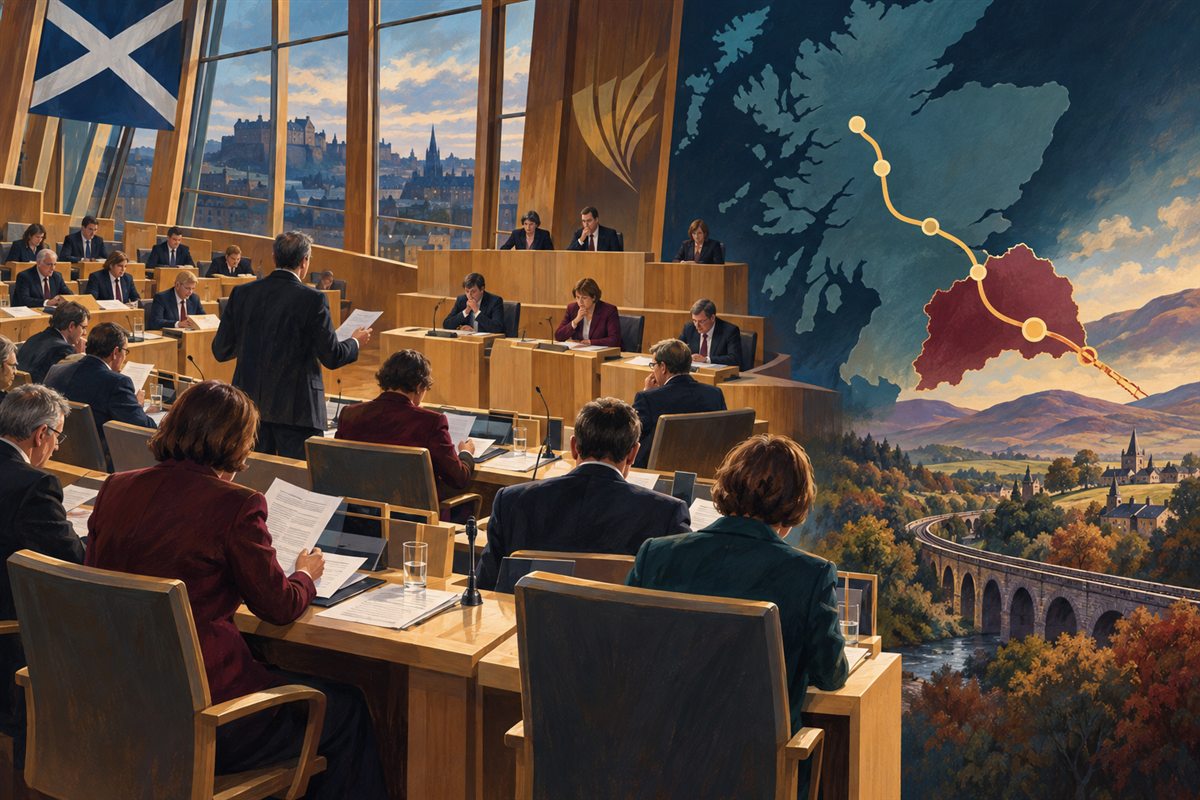
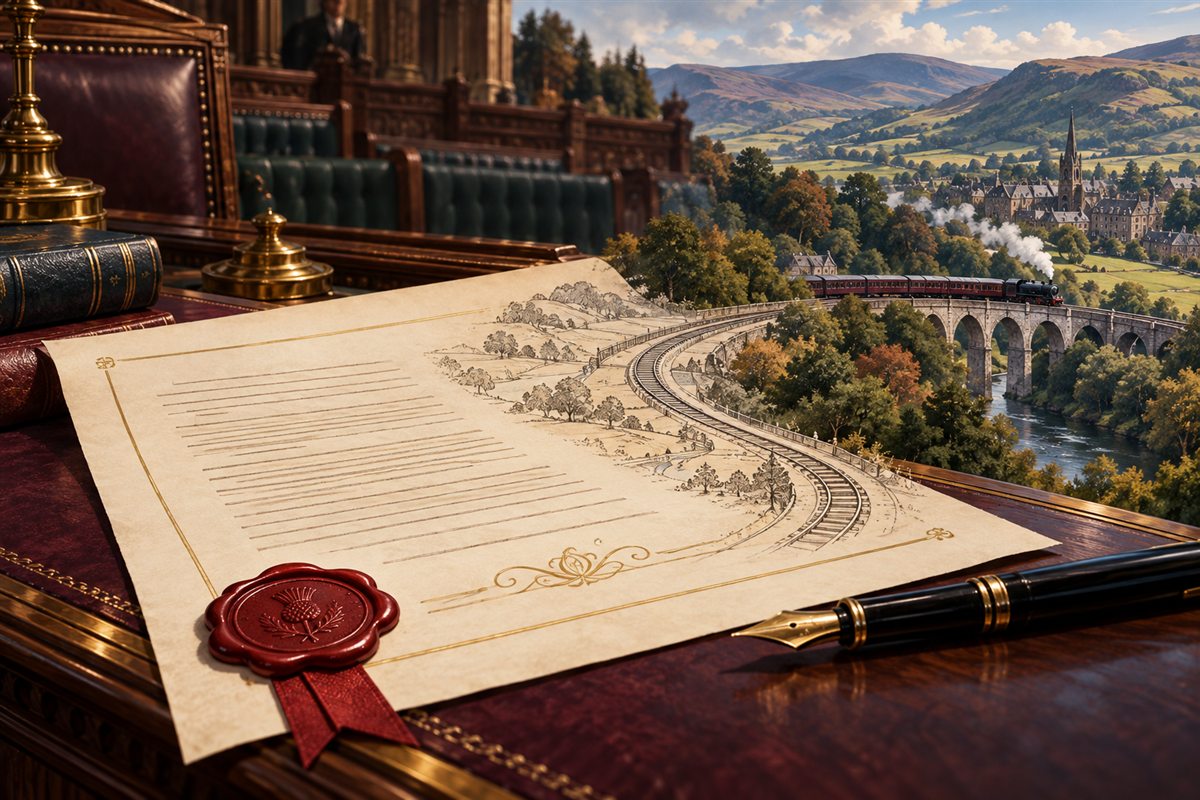
The Campaign for Borders Rail formed in 1999 and helped turn decades of discussion into a political project. The Waverley Railway (Scotland) Act received Royal Assent in 2006, giving authority for a new railway from Edinburgh through Midlothian to Tweedbank. An old route had become a contemporary transport commitment.
02
Building the railway again
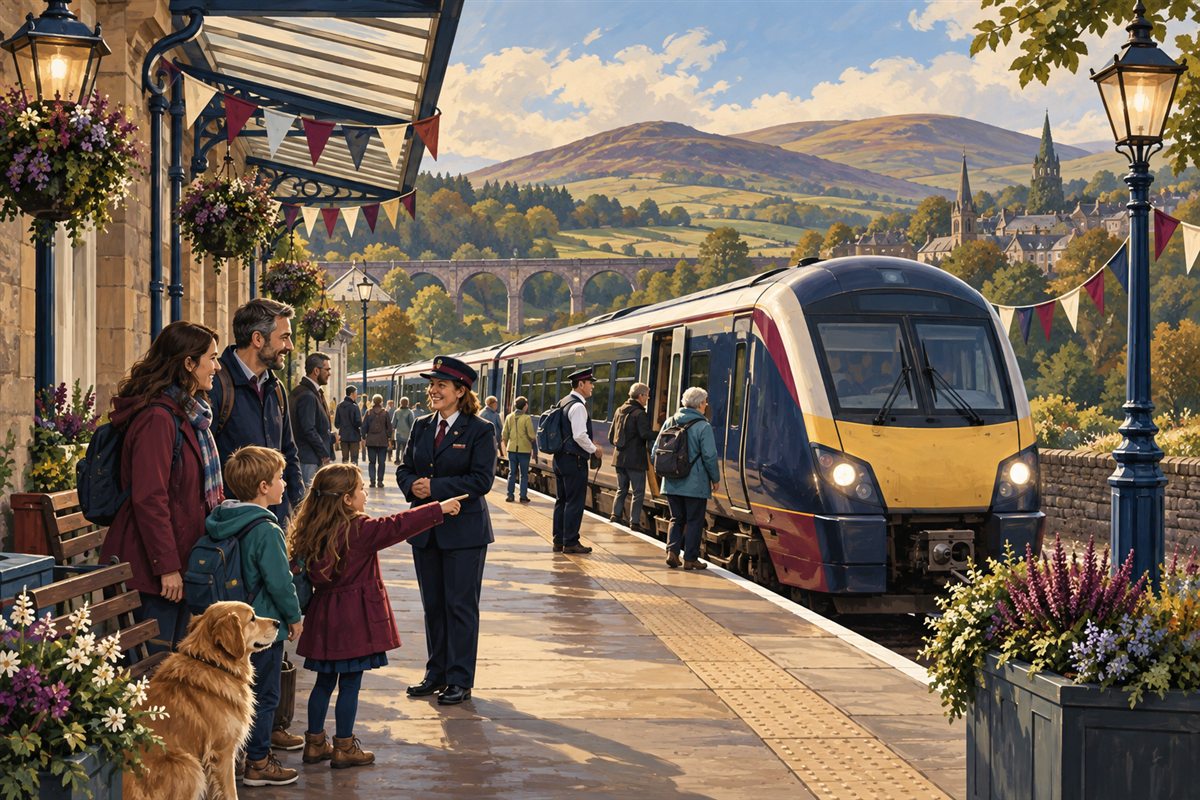
Construction transformed cuttings, bridges and station sites that had been quiet for more than forty years. The reopened line was not a museum copy of 1969: it was a modern railway with contemporary standards, new stations and a timetable designed for present-day journeys. Yet its geography made the history unmistakable.
03
History in public hands
Heritage centres, local archives, railway societies and individual photographers preserve stories from closed and surviving lines. Digital mapping and filmed journeys make distant places accessible, while campaigners continue to debate extensions and better connections. Scotland’s railway history now sits beside an active argument about its future.
Moments on the railway
Dates that changed the lines.
Follow the events already connected to the Waverley Route, Port Road and Dunblane–Callander railway stories.
The Waverley Route
Campaign for Borders Rail is formed
A community campaign is established to seek the restoration of rail services to the Borders and, ultimately, the through route.