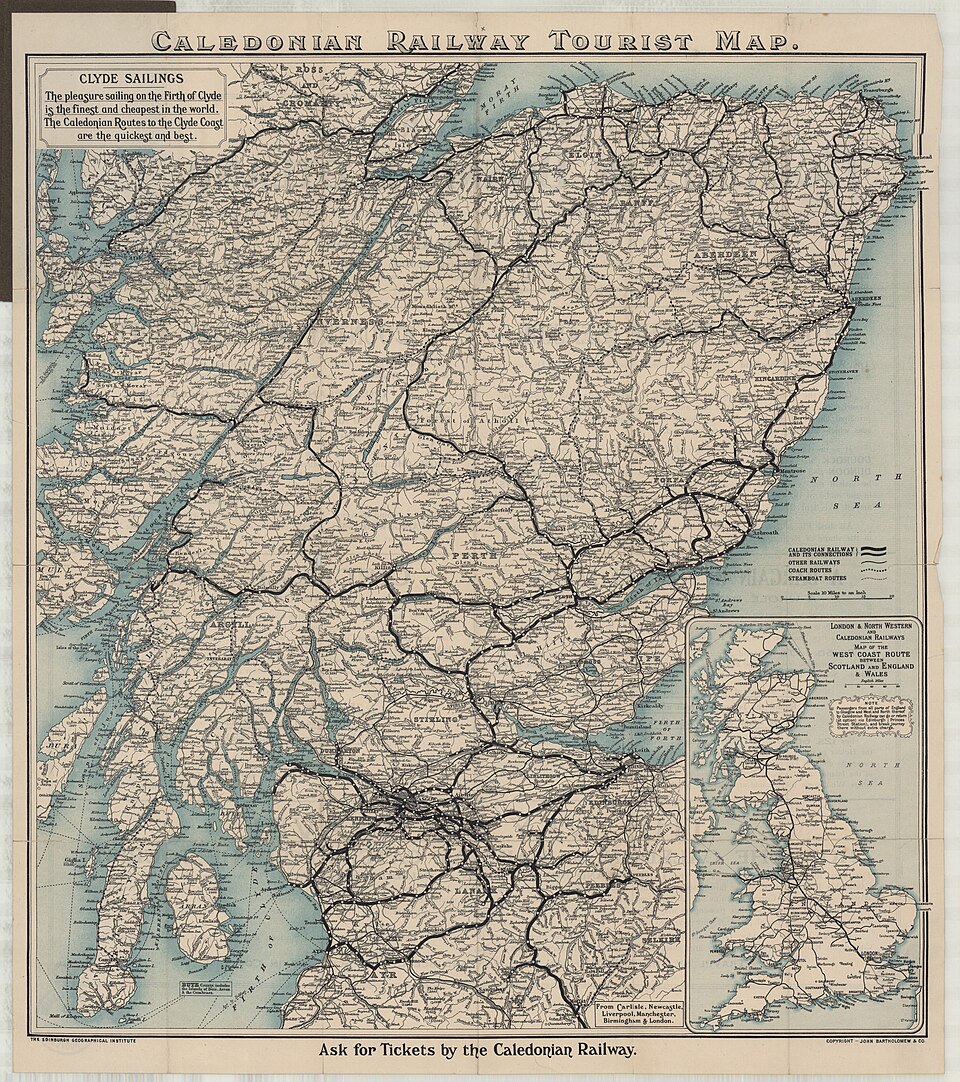
A Caledonian Railway tourist map sold Scotland as a connected landscape of cities, lochs, glens and onward journeys.Historic Caledonian Railway map · project collection
Scotland’s railways · 1880–1922
The Great Scottish Companies
The railway at its confident, company-built height.
Distinctive companies, liveries and stations shaped an age of express travel, heavy goods traffic, tourist promotion and railway communities with identities of their own.
The North British and Caledonian railways were more than operators. Their colours, architecture, publicity and rival routes became part of Scotland’s visual landscape. The Waverley Route belonged to the North British; the Port Road and the route through Doune and Callander became Caledonian territory. Each system promoted its own way north, south and west.
02
A railway for work and leisure
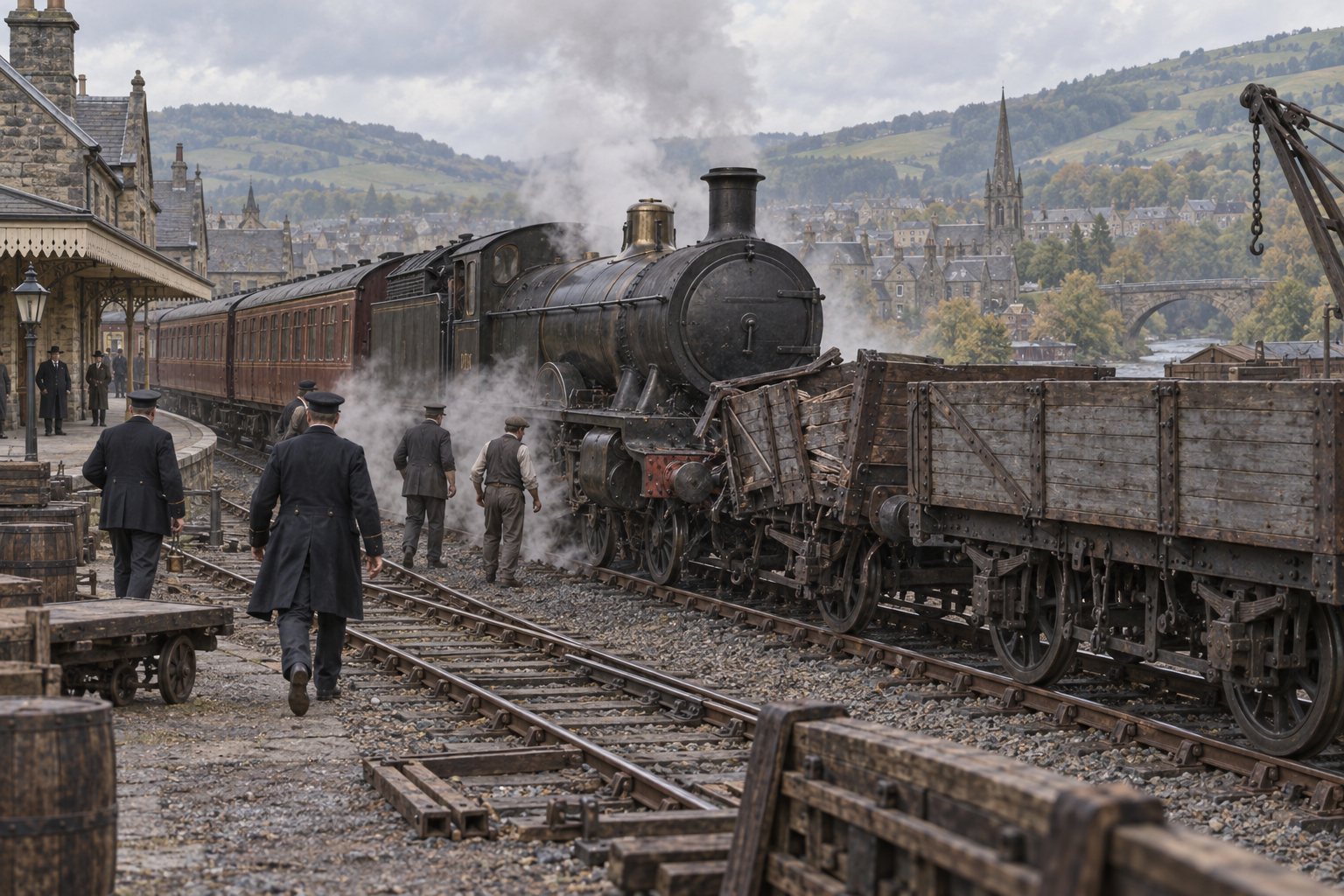
Morning goods trains, livestock traffic, parcels and commuter journeys shared the railway with holiday expresses and tourist coaches. Callander became a gateway to the Trossachs and the West Highlands. Stranraer Harbour connected rails with steamers. Border towns sent textiles and agricultural traffic into a network that reached far beyond Scotland.
03
The human railway
Behind the polished publicity stood signalmen, porters, clerks, platelayers, drivers, firemen and stationmasters. Railway housing and shift work gave places such as Riccarton Junction an intensely railway character. War then transformed the system again, placing enormous demands on people, locomotives and infrastructure before the company age ended.
Moments on the railway
Dates that changed the lines.
Follow the events already connected to the Waverley Route, Port Road and Dunblane–Callander railway stories.